
Sources for Past Horizon City Residents
A backward address trail changes as the time period changes. El Paso County’s property and deed systems are the core sources for the land, while regional directories and census schedules can add household context. Municipal permits, code files, planning records, and court records are separate city-held sources if an existing file is relevant. No public Horizon City permit or municipal-court name index was located, so a written Public Information Act request or department contact is the documented fallback for those records.
| Source | Years | Where Held | What It Shows |
|---|---|---|---|
| Historic Deed Index Books | 1874-1963 | El Paso County Clerk QuickLink | Historic index-book search by type, year, party, or book, volume, and page |
| Official Public Records | Current interface; online start not located | El Paso County recorded-document portal | Recorded document leads by party, legal description, style, and date |
| El Paso directories | 1886-2011 at EPCHS, with gaps; selected TSLAC years through 1993 | EPCHS, Border Heritage, TSLAC, UTEP, and UNT | Dated name, address, occupation, street-guide, or other directory clues |
| Federal population schedules | Public schedules through 1950 | Census and library research channels | Household evidence, subject to the 72-year release rule |
| Municipal file request | Existing files only; no online index located | Horizon City department or Public Information Act route | Permit, inspection, code, planning, or municipal-court context where releasable |
Start with a modern parcel identifier when the address is known. Start with a surname and a year when the goal is an earlier household. A deed is evidence of an instrument or interest, not automatic proof that a person lived at the property. A directory or census record is also dated evidence, not a statement about the present.
The Texas State Library’s El Paso city-directory holdings are one documented shelf route for a missing directory year.
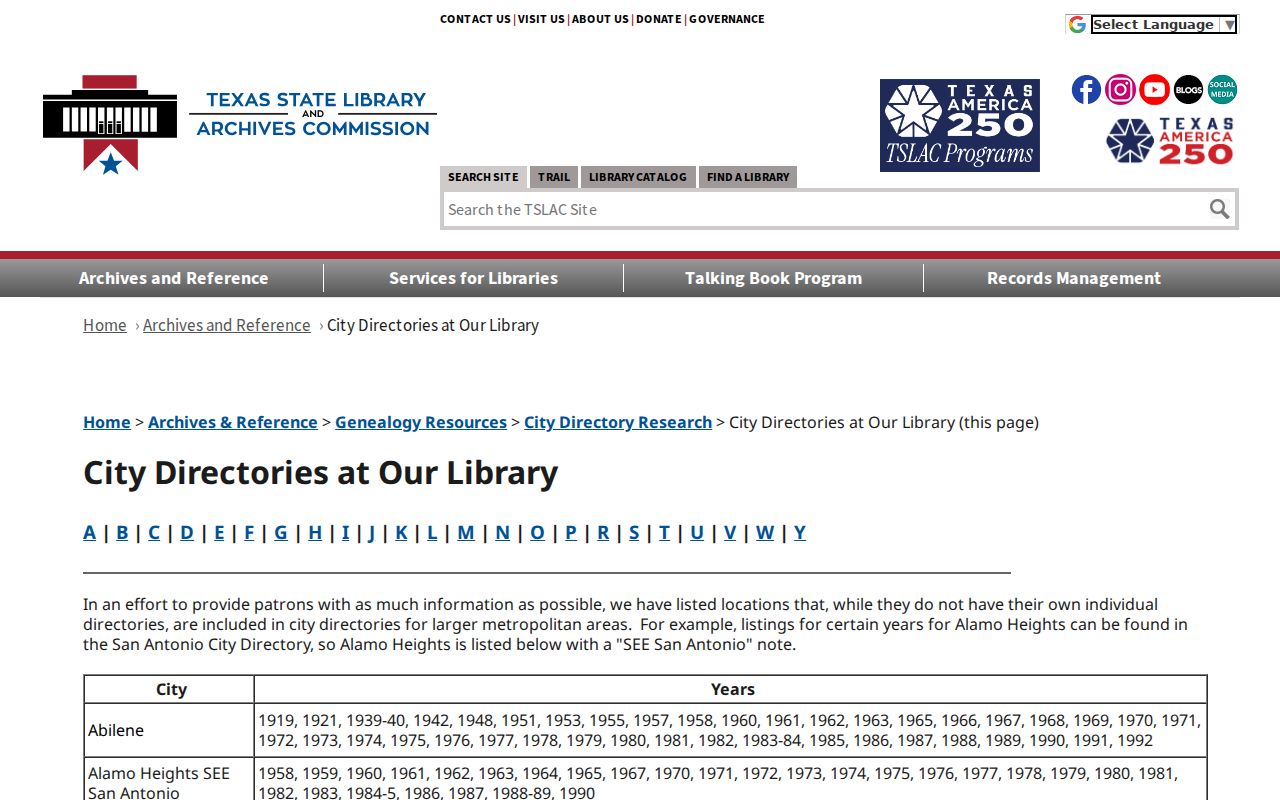
The state-library listing is a useful fallback after checking local collections, but its year list should be confirmed with the custodian before a visit or request.
Horizon City Previous Residents by Era
Horizon City has an unusual address-history problem. The County Clerk’s historic deed books begin in 1874, but official town history places local development in 1962 while the area was still unincorporated. Incorporation followed in 1988. A deep land chain can therefore exist without an early record calling the place Horizon City. Treat early material as county, rural, or El Paso-area evidence unless the document itself establishes the later town connection.
The legal description is the bridge between these eras. It can use subdivision, lot, block, unit, tract, or book and page language that survives changes in postal wording and municipal context. The town’s comprehensive plan and zoning map help compare subdivision and city-limit context, while the County Clerk index follows the recorded land record. Preserve both the original street string and the legal-description terms in your notes.
Note: The older land trail may be extensive even when the neighborhood identity is comparatively recent.
Horizon City Historic Deed Books
The Historic Deed Index QuickLink is the backward deed route for El Paso County records from 1874 through 1963. Its visible paths are Search Index Books, with Type, Year, Parties, Last Name, and First Name controls, and Search for Document, with Book, Volume, and Page. Remote access is available around the clock. Linked documents may be viewed or purchased, and an account is required to purchase. The Deed of Trust series is identified as under construction.
Use the index to locate a possible instrument, then compare the legal description before treating it as part of the same parcel chain. If an older name is common, test the year and party role as well as the book or page route. The search interface did not expose a named result inventory in the source review, so do not expect unverified result fields or assume every index hit has a free image.
Horizon City Current Deed Results
The El Paso County Official Public Records search is the separate current recorded-document path. It accepts an 11-digit document number, deed name in Last Name First Name form, subdivision, style, book number, page, lot, block, unit, tract, and a file-date range. The portal returns no more than 10 documents per search, so narrow a broad address history by legal-description term, style, date, or party name. Its exact online coverage start was not located.
Document style adds context but should not be mistaken for a sale. The visible style list includes deeds, warranty deeds, quitclaim deeds, deeds of trust, easements, liens, restrictions, maps, surveys, probate instruments, and other records. The county warns that a professional title or lien search is not a substitute for its index, and a certified document still comes from the County Clerk. The recording counter is at 500 E San Antonio Ave, Suite 105, El Paso, Texas 79901, with 915-273-3532 listed for the division.
Trace Horizon City Previous Residents
Use the modern assessor record to anchor the address before walking backward. EPCAD Property Search offers owner name, address, property ID, and GeoID search routes. Its advanced form also accepts a street name without a number, which can help when an address format fails. The displayed owner is a lead to the parcel account, not an occupancy certification. Record the account, GeoID, exact subdivision, and owner name shown, then move to the deed portal using the legal-description terms.
- Search the modern street address in EPCAD and save the account, GeoID, subdivision, and displayed owner name.
- Search Official Public Records by party, subdivision, lot, block, unit, tract, or a tight date range.
- Read the latest conveyance and identify the prior grantor, then search that person or entity as a possible earlier grantee.
- Repeat the process only when the legal description matches, recording the document style, date, and indexed parties.
- Move to QuickLink for earlier transfers, using its year and party controls or its book, volume, and page route.
- Grantor and grantee
- The grantor transfers an interest in an instrument. The grantee receives that interest. The roles must be read from the document context.
- Chain of title
- A sequence of recorded instruments connected by the same property description. It is not a statement that every party occupied the address.
- Legal description
- The parcel language used in recorded instruments, such as subdivision, lot, block, unit, or tract. It is often more reliable than an old street string.
Horizon City Address Context Checks
A Horizon City address can appear in several forms: postal address, situs address, legal description, registered address, and historical address. USPS validates delivery and ZIP, while EPCAD uses the physical parcel address. The County Clerk’s recorded-document system relies on legal-description fields. Directories, newspapers, permits, maps, and census schedules may use an earlier street name, rural route, subdivision name, or El Paso postal designation. Mark the address type beside every finding.
Planning records add another check. The comprehensive plan map identifies annexation references dated April 13, 1999, and August 14, 2001. Its zoning material shows subdivisions, city limits, annexed property, lot lines, and rights-of-way, but it is not a current title map. Horizon City’s address ordinance is a lead for official standards. A documented citywide renumbering date was not found, so do not claim one when a street search seems inconsistent.
Past Households in Horizon City Records
The owner chain is only one layer of a past-residents search. Regional directories can place a name or street in a dated edition, and the public census schedule can place people in a household. The historical collections themselves are described on the Horizon City city directories page. Search the alphabetical section first, then ask whether the selected volume has a street, reverse, or criss-cross section. A complete El Paso year-by-year reverse-directory inventory was not located.
The El Paso County Historical Society collections are the source shown here.

EPCHS reports city directories from 1886 through 2011 as well as photographs, maps, scrapbooks, school annuals, and newspapers, giving a house-history search more than one way to test a date or place.
Border Heritage is another local-history route. It holds El Paso Times and Herald-Post microfilm and fiche, maps, yearbooks, city directories, and genealogy reference materials. Its page does not provide a complete standalone obituary-index coverage. Ask staff for newspaper and microfilm methods instead of promising a searchable obituary database.
Horizon City Directory Census Pairing
Pair the directory date nearest a census year with the public schedule, then check whether the address and household details agree. The Census Bureau releases individual decennial records under a 72-year rule. The 1950 census was released on April 2, 2022, and 1960 is scheduled for 2032. Search by enumeration district and the historic locality when the modern Horizon City name does not appear in the older material.
Census public-record guidance explains the release schedule shown here.
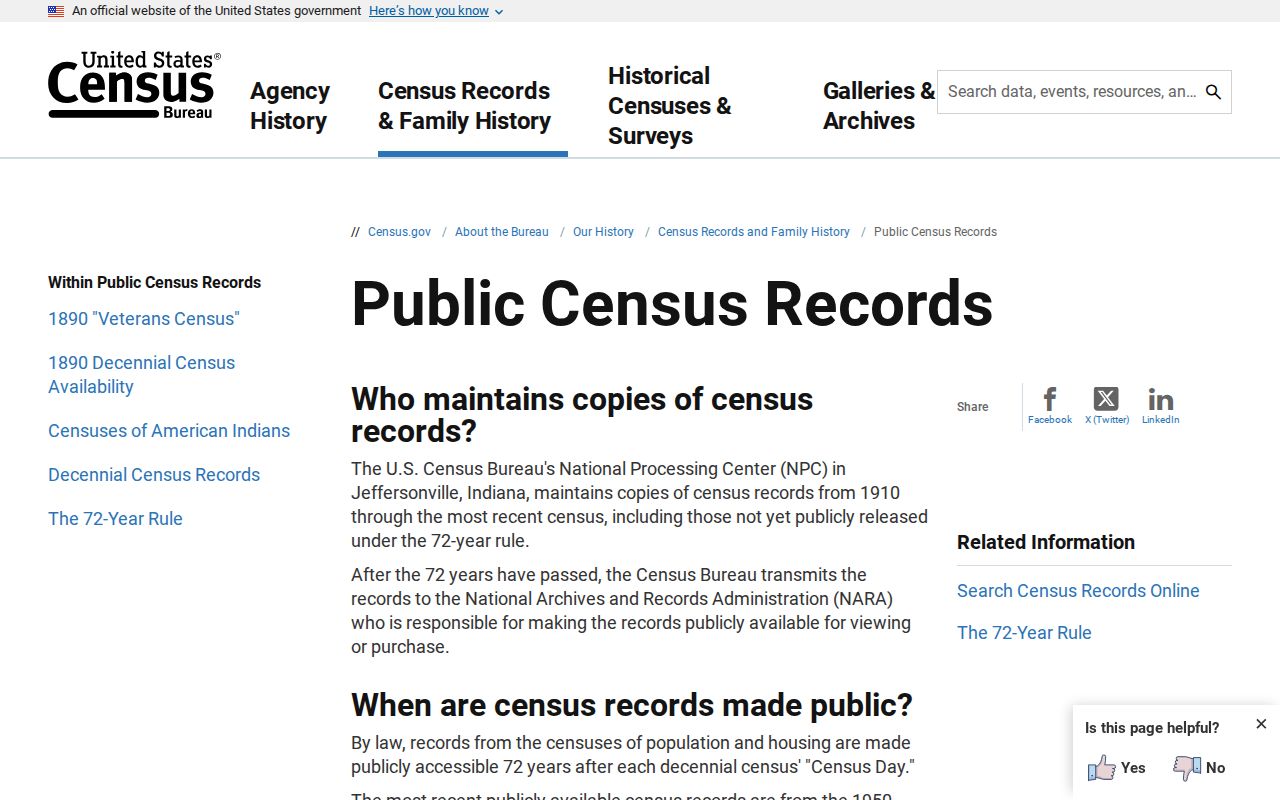
The public census is a dated household source, not a substitute for the deed index. Pairing it with a directory and legal description makes it easier to see whether a name belongs to the same historical address trail.
- Choose a directory year close to a public census year and copy the name and address as printed.
- Search the census using the historic locality and enumeration-district context when needed.
- Compare the household, address wording, and time period with the directory entry.
- Use a deed, map, or newspaper item to resolve a changed street or subdivision label.
Horizon City Previous Residents Files
A city-held file can supply an address date or project clue, but it is not a public resident roll. Building Services lists application categories for construction and inspections, while code enforcement and planning handle their own records. No public online permit, code, planning, or municipal-court name index was located in the official pages. For an existing record, use the City Clerk’s written Public Information Act process and identify the address, department, record type, date range, and preferred delivery method.
The city’s open-records form offers examination-only or copied/duplicated choices and delivery options for email, mail, pickup, or limited fax use. It says the city provides existing information rather than creating a new record. The form directs requests to HorizonOpenRecords@horizoncity.org and Town Hall at 14999 Darrington Road. Cost estimates over $40 and a possible deposit above $100 are described in the local form; verify current terms with the city before submitting.
Note: A permit or code file may date an event at an address, but it should be read within its own record purpose.
Horizon City Previous Residents Limits
Past-residents research is best used for family history, house history, estate and heir questions, and personal civic curiosity. Keep an owner, a deed party, a directory occupant, and a census household distinct unless the documents support the same conclusion. Existing public records can have access limits, incomplete indexing, or a date gap. Ask the custodian for a complete image or certified copy when the document’s legal effect matters.
Lawful use. Use Horizon City address history for legitimate personal research. Texas law prohibits stalking or harassment, and a historical record must never be used to track or harm a living person.
Keep the source, date, address type, and access condition with every note. That small record of your own makes it clear whether a finding is a historical lead, a recorded instrument, a household clue, or an unverified connection.